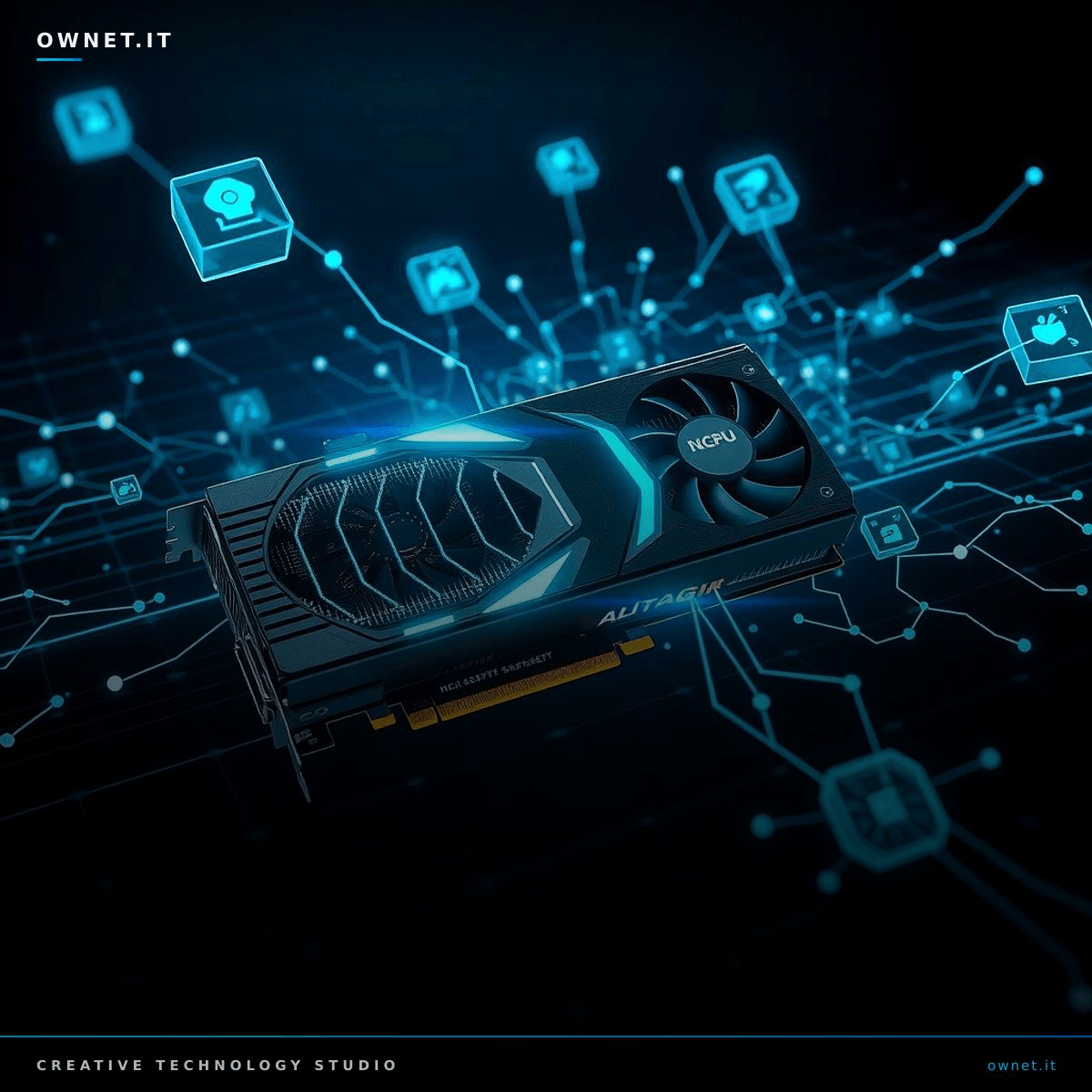
The local AI revolution just got real. While everyone's been throwing money at cloud APIs, a breakthrough benchmark shows that a modest $500 GPU can outperform Claude Sonnet on coding tasks. This isn't just another hardware announcement—it's a paradigm shift that changes everything about how we build AI-powered applications.
The ATLAS Breakthrough: What Actually Happened
The ATLAS project demonstrated something remarkable: local inference with consumer hardware can match or exceed premium cloud AI services on specific coding benchmarks. Using optimized models on affordable GPUs, developers achieved performance levels that rival Claude Sonnet—without the API costs, latency, or privacy concerns.
This matters because most development teams have been conditioned to think that serious AI work requires enterprise budgets. The reality is different. With the right optimization techniques and model selection, a single RTX 4070 can power sophisticated coding assistants, code review systems, and automated refactoring tools.
The gap between cloud AI and local inference isn't about raw capability anymore—it's about optimization, tooling, and knowing which models to deploy where.
Why This Changes Web Development Forever
At OWNET's AI engineering practice, we've been experimenting with hybrid approaches that combine local and cloud inference. The ATLAS results validate what we're seeing: local AI isn't a compromise, it's often the better choice.
Cost Economics That Actually Work
Consider a typical SaaS application with AI features. Cloud API costs scale linearly with usage—great for prototypes, terrible for scale. A $500 GPU investment breaks even after processing what would cost $2000-5000 in Claude API calls. For any application processing more than 1000 AI requests daily, local inference becomes economically mandatory.
Latency That Users Actually Notice
Response times drop from 2-5 seconds (cloud) to 200-800ms (local). That's the difference between "AI feels slow" and "AI feels instant." In Next.js applications, this means we can integrate AI features that feel native rather than bolted-on.
The Technical Architecture That Makes It Work
The key insight from ATLAS isn't just about raw performance—it's about intelligent model deployment. Here's the architecture pattern we're implementing for clients:
// Hybrid AI Router Pattern
class AIRouter {
  async processRequest(task, complexity) {
    if (complexity < threshold && localModel.available()) {
      return await this.localInference(task);
    }
    return await this.cloudFallback(task);
  }
}
This approach uses local models for 80% of tasks (code completion, simple analysis, formatting) and reserves cloud APIs for genuinely complex reasoning. The result: 10x cost reduction with better user experience.
GPU Selection Strategy
Not all GPUs are created equal for AI workloads. Based on our testing:
- RTX 4070/4080: Sweet spot for most development teams
- RTX 4090: Maximum local capability, worth it for AI-heavy applications
- RTX 3080/3090: Budget option, 70% of new-gen performance
Implementation Reality: What Actually Works
Theory is easy. Implementation is where most teams fail. After deploying local AI systems for multiple client projects, here's what actually matters:
Model Selection Framework
Choose models based on task specificity, not general benchmarks. Code generation needs different optimization than code review. Text analysis needs different models than API documentation generation.
The ATLAS approach works because it focuses on coding-specific benchmarks rather than general language capabilities. This specificity is crucial—general-purpose models waste resources on capabilities you don't need.
Infrastructure Integration
Local AI isn't just about buying a GPU. It requires:
- Proper thermal management (GPUs running AI workloads generate serious heat)
- Memory optimization (VRAM is the real bottleneck, not compute)
- Fallback systems (local hardware fails, cloud APIs provide resilience)
- Monitoring and alerting (GPU health, model performance, usage patterns)
The teams winning with local AI aren't just running models locally—they're building hybrid systems that intelligently route tasks based on complexity, cost, and performance requirements.
The Strategic Implications for Development Teams
This shift represents more than cost savings. It's about strategic independence. Teams relying entirely on cloud AI are subject to pricing changes, rate limits, and service availability. Local capabilities provide leverage in vendor negotiations and insurance against API disruptions.
For development agencies like OWNET, this creates competitive advantages. We can offer clients AI-powered features at sustainable costs, with predictable performance and enhanced privacy protection.
The next 12 months will separate teams that adapt to hybrid AI architectures from those still burning cash on cloud-only approaches. The technology exists. The benchmarks prove it works. The question is: are you building for the future, or subsidizing cloud providers?
Ready to implement local AI in your development workflow? Get in touch—we're already building these systems for forward-thinking teams.