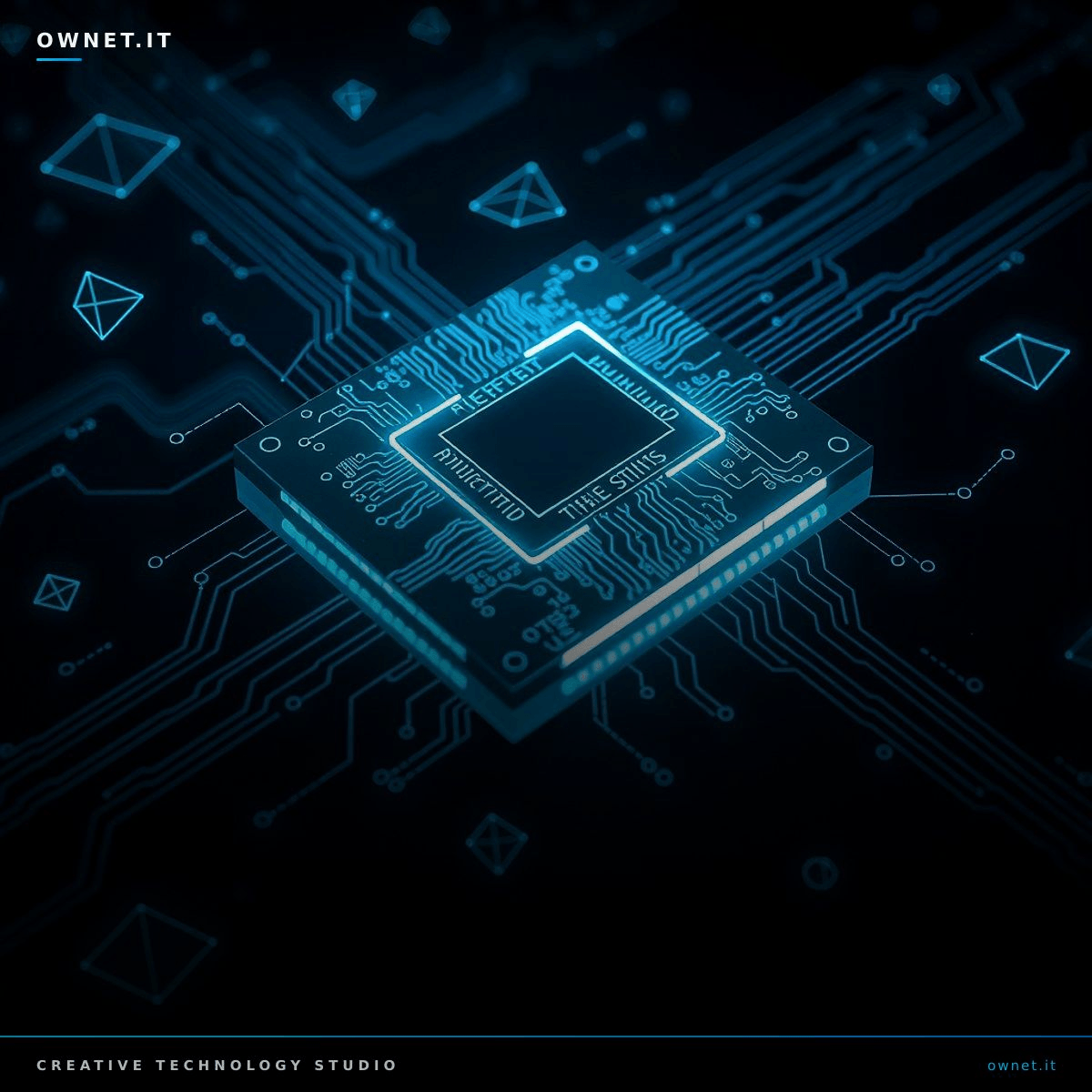
ARM's latest announcement of their AGI-focused CPU architecture isn't just another chip launch—it's a fundamental shift that will reshape how we build and deploy web applications. While the tech world obsesses over software frameworks, ARM is betting that the future of AI belongs at the silicon level, and this has massive implications for full-stack developers and digital agencies like us.
The Architecture Revolution Behind AGI Computing
ARM's new AGI CPU represents a departure from traditional von Neumann architecture. Instead of treating AI workloads as an afterthought, the chip is designed from the ground up for parallel processing and neural network operations. This isn't just about adding more cores—it's about rethinking how data flows through the processor.
For web developers, this means we're looking at a future where AI inference happens locally, at unprecedented speeds. Think real-time language models running directly in the browser, or computer vision APIs that don't require cloud round-trips. The implications for OWNET's AI engineering services are enormous.
What This Means for JavaScript Performance
Current AI integrations in web applications rely heavily on API calls to services like OpenAI or Anthropic. With ARM's AGI architecture, we could see:
- Local LLM inference faster than API response times
- Real-time AI features without internet dependency
- Privacy-first AI applications that never send data to external servers
- Drastically reduced operational costs for AI-powered SaaS platforms
The Edge Computing Renaissance
ARM's move signals something bigger: the pendulum is swinging back from centralized cloud AI to distributed edge computing. This isn't just about mobile devices—it's about bringing AGI capabilities to every endpoint in the network.
At OWNET, we're already seeing clients ask for AI features that work offline or in low-connectivity environments. ARM's AGI CPU makes this not just possible, but practical. Imagine e-commerce platforms with intelligent product recommendations that work even when your connection drops, or content management systems with real-time translation that doesn't rely on Google Translate APIs.
"The future of AI isn't in the cloud—it's wherever your users are. ARM understands this."
Practical Implications for Next.js Applications
For developers working with Next.js and React—technologies we use daily at OWNET—this opens up entirely new architectural patterns:
// Future: Local AI inference in the browser
const aiResponse = await localLLM.generate({
  prompt: userInput,
  model: 'arm-optimized-llama',
  temperature: 0.7
});

// No API keys, no rate limits, no latency
This isn't science fiction. With ARM's AGI architecture, we're looking at JavaScript applications that can run sophisticated AI models locally, opening up possibilities for creative digital solutions we haven't even imagined yet.
The Developer Experience Revolution
One aspect that's being overlooked in the coverage is how this will transform the developer experience. Currently, integrating AI into web applications means:
- Managing API keys and rate limits
- Handling network failures and timeouts
- Optimizing for latency across different regions
- Balancing cost with performance
ARM's AGI CPU eliminates most of these pain points. Local AI inference means no API management, no network dependencies, and predictable performance regardless of user location.
New Challenges, New Opportunities
Of course, this shift brings its own challenges. Model optimization becomes crucial when you're running inference on device. Battery life considerations return to the forefront. And we'll need entirely new approaches to model updates and versioning.
But for agencies that get ahead of this curve, the competitive advantages are massive. Faster applications, lower operational costs, and AI features that work reliably in any environment.
What This Means for Your Next Project
While ARM's AGI CPUs won't be in consumer devices immediately, smart development teams are already thinking about how to architect applications for this future. At OWNET, we're exploring:
- Hybrid AI architectures that can seamlessly switch between local and cloud inference
- Progressive enhancement patterns for AI features that work better on AGI-enabled devices
- Model optimization techniques that prepare applications for local inference
The key is to start building with this future in mind. Applications that assume cloud-first AI will struggle to adapt when local AGI becomes the norm.
"The best time to prepare for the AGI revolution was yesterday. The second-best time is now."
ARM's AGI CPU announcement isn't just about faster chips—it's about a fundamental shift in how we think about AI in applications. For developers and agencies willing to adapt early, this represents one of the biggest opportunities in web development since the mobile revolution.
Ready to future-proof your applications for the AGI era? Let's discuss how OWNET can help you prepare for this architectural shift.